
If a transformer keeps failing early inside a hot enclosure, chances are the heat itself isn't the real problem — the insulation class is. A standard transformer is only rated to handle so much continuous heat before its internal insulation starts breaking down, and once that happens, failure isn't a matter of if but when. If you're running equipment in a steel mill, a chemical plant, a densely packed control cabinet, or anywhere else ambient heat is a fact of life, choosing a transformer built to a higher temperature class isn't a spec upgrade for its own sake — it's the difference between a unit that lasts for years and one you'll be replacing on a schedule.
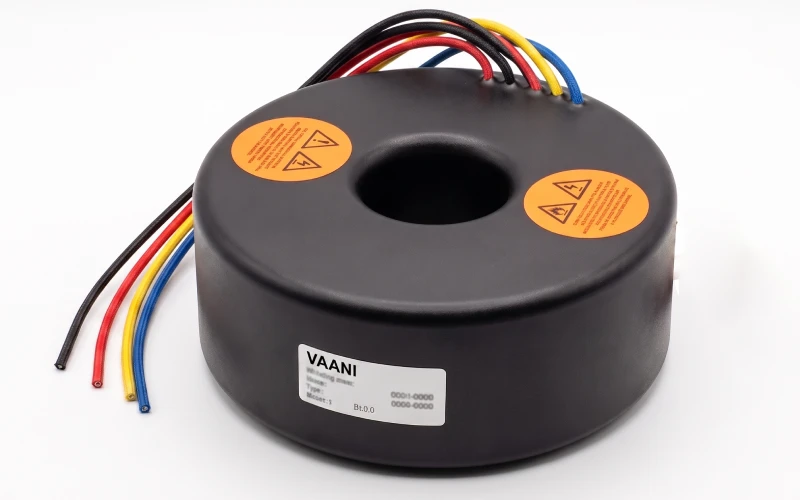 A custom toroidal transformer built to run reliably in continuous high-ambient heat
Why This Matters More Than It Sounds Like It Should
A transformer's temperature class isn't a marketing label — it's the maximum heat its insulation system can sit at, day after day, without quietly aging faster than it should. Run a standard-rated transformer past that limit and nothing dramatic happens at first: there's no smoke, no alarm, no obvious sign anything is wrong. What you get instead is a slow countdown — insulation that dries out and cracks a little earlier every month, until one day, often at the worst possible time, it fails. Choosing the right temperature class up front means that countdown simply isn't running against you.
| Rating | What It Means For You |
|---|---|
| Standard | Fine for a cool, well-ventilated space — the first thing to age out once the enclosure runs hot |
| Class H | Built-in headroom for hot cabinets, motor drives, and inverters running near their limit all day |
| Class C | Maximum margin — engineered to keep working through the harshest, most continuous heat your site can throw at it |
What This Buys You
A higher temperature class doesn't change how the transformer performs on day one — it changes how it performs on day one thousand. It's the difference between a transformer that's still going strong years into continuous duty, and one that's already showing signs of wear.
1. Far Fewer Unplanned Failures
The single biggest benefit of specifying the right temperature class is one you'll never actually see happen: the failure that doesn't occur. Equipment running in a hot enclosure with an under-rated transformer tends to fail in clusters — a hot summer, a busy production run, a blocked vent — right when you can least afford the downtime. Matching the transformer's rating to the real heat it will sit in removes that risk from the equation entirely, so a hot day stays a hot day instead of becoming a service call.
2. Longer Service Life, Without Babying the Equipment
Heat is the single biggest factor in how long any transformer lasts, and the relationship isn't gentle — insulation life roughly halves for every 10°C it's forced to run above its rated limit. A higher temperature class simply moves that ceiling up, so the same real-world heat that would slowly wear out a standard unit barely registers against a Class H or Class C rating. You get a transformer that ages at a normal pace even while sitting somewhere genuinely hot.
3. Confidence in Enclosures That Can't Be Cooled
Not every installation has the luxury of a fan, airflow, or a climate-controlled room — sealed cabinets, outdoor housings, and densely packed panels routinely run far hotter inside than the room around them. A high-temperature toroidal transformer is built for exactly that reality: it doesn't need extra ventilation engineered around it to survive, which gives you far more freedom in how tightly you can pack or seal your enclosure in the first place.
4. A Toroidal Core Gives You Extra Margin on Top
The temperature class covers the insulation; the shape of the core adds its own layer of benefit on top of that. Because a toroidal transformer runs cooler to begin with — no single spot on it works harder or gets hotter than the rest — it never eats into the temperature headroom you're paying for with a high-temp rating. That translates to real, practical advantages: less wasted energy as heat, a transformer that stays quiet and stable under load, and a sealed or resin-potted build that shrugs off humidity, corrosive fumes, and constant vibration instead of slowly failing from them. You get the full benefit of the Class H or Class C rating, not one that's partly cancelled out by a core design working against it.
Put together, here's what a high-temperature toroidal transformer is actually doing for your product:
5. Which One Is Right for Your Application?
Most industrial equipment doesn't need to go straight to the top-tier rating — it needs the rating that matches where it's actually going to live. Think of it less as "more is always better" and more as removing the wrong temperature class from your risk list entirely:
6. A Detail Worth Asking For: Built-In Overheat Protection
The best way to get the full benefit of a high-temperature transformer is to also know the moment something goes genuinely wrong — a blocked vent, a stuck fan, a load well beyond design. Adding an internal thermal cutoff or an embedded RTD sensor means your equipment can react to real winding temperature the instant it goes out of range, instead of finding out only after something fails. It's a small addition at the design stage that pays for itself the first time it catches a problem before it becomes a breakdown.
Final Thoughts
A high-temperature rating isn't about chasing a bigger number on a datasheet — it's about buying back years of reliable, unattended service from equipment that has to run somewhere genuinely hot. At Vaani, we build custom toroidal transformers on CRGO silicon steel cores with 100% electrolytic copper windings, and can engineer them to Class H or Class C insulation ratings to match exactly how hot your enclosure or environment really gets — so the heat that would wear out a standard transformer simply isn't a problem for yours.